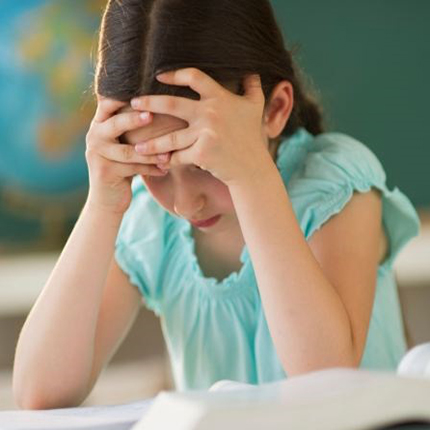
A child’s parents are, in most cases, the most important people in his or her life. A mother and father that work together have the unique ability to care for their each of their children’s physical, emotional, and mental needs. Parents clearly play a fundamental role in the development of their children.
According to a report published by MathAndReadingHelp.org, 78% of students who struggle to read at a young age will struggle to learn important social and emotional skills as well.* What this means is the majority of children that struggle reading will develop slower in other areas of their lives as well.
I can vividly recall being a young boy watching my mother and father struggle alongside my older brother as he limped through elementary and middle school. My older brother was diagnosed at a young age with Attention Deficit Disorder, problems with visual perception and memory retention, and dyslexia. These problems primarily manifested themselves in his inability to read and stay focused in a classroom environment.
My parents would spend hours with my brother on a nightly basis, trying to teach him basic learning principles and help him with his homework. With each letter that my brother failed to identify, with each word he struggled to sound out, his spirit would break a little. And my parents’ heart would ache.
This heartache of watching their son struggle to keep up with any of his classmates could only be matched by the feeling of joy and gratitude they had when my brother would experience some sort of breakthrough or get an “A” on a test.
According to a report filed by ChildStats.gov, children ages three to five who are read to by their parents have higher language acquisition and literacy development.* ChildStats.gov said they have also found these results to correlate with achievement in reading comprehension and overall success in school later on.
Many people would argue that it’s not the parents’ job to educate their children, but that this should be done in a formal classroom environment. Parents are already plenty busy working to provide for their children’s basic needs, so it is really their children’s teachers job to handle educational matters.
Parents are also not specialists. They are not certified educators and even the majority of parents who homeschool their children have no state certification to do so. EDUtopia.org argues this point frankly, as one of their primary functions is to ensure the credibility and validity of homeschool environments.* One of the hotbed and most frequently debated issues discussed amongst parents and educators alike on this website are whether or not the state should require teacher certification for parents who homeschool their children.
Nicole Eredics, an educator who works closely with the National Dissemination Center for Children with Disabilities, gave a presentation in September 2010 about parent’s role in educating their children.* During her presentation, she explained that in the beginning of her career, Ms. Eredics relied solely on the expertise of school specialists and administrators to guide her teaching practices in the classroom. While she was told that parents could be part of each child’s learning process, she never actively promoted parental inclusion. She said that she, “assumed that the school experts knew best.”
Ms. Eredics continued saying that she first came to understand the value of parents in a child’s learning process after her first child entered the school system. “I found myself thinking as a parent and not a teacher. Would my child’s strengths and weaknesses be addressed? Would the teacher help him make friends? Would my son be seen as a peer or an outsider to his classmates? Within the first few months of school, I became anxious and frustrated. I knew so much about him that could truly make more of a difference in his education. I had spent hours observing him, reading books, talking to professionals and attending workshops. Only I had insight into his special needs.
“I realized that I could not expect the school to fulfill all of my son’s educational goals without my support. I needed to become involved in the process.”
Parents need to play an active role in their children’s early education because of the overwhelming positive impact it will have on the rest of their children’s scholastic experience.
A 2009 research conducted by North Carolina State University showed that parental inclusion in a child’s scholastic experience is extremely useful in helping young people who are having difficulty with grades or behavior become more engaged and do well in school and life.*
Dr. Jocelyn Taliaferro, an associate professor of social work at NC State, said that, “it is a parental right and responsibility to be involved in their child’s education.”
My older brother is now 30-years-old and recently graduated from Northern Arizona University with a Master’s of Art in Western Borderlands History. He credits the success he had in high school and college primarily to the countless hours our parents read to him and studied with him. He has worked tirelessly to achieve academic success, but the foundation of that success was laid by our parents.
As previously noted by Dr. Taliaferro, it is a parent’s duty to be actively involved with their children’s education. Being an active participant in a child’s education will not only help the child through school, but also help him or her develop special skills that will aide them throughout the rest of his or her life.
Parents need to read to their children, parents need to work with their children, and parents need to available to help their children.
The overall success of your child’s life may just depend on it.
*http://mathandreadinghelp.org/articles/How_to_Improve_Your_Child’s_Attitude_Toward_Learning
*http://childstats.gov/americaschildren/tables.asp
*http://www.edutopia.org/homeschooling-credential-court-ruling
*http://www.specialeducationadvisor.com/the-inspirational-teacher-series-nicole-eredics/
*http://putraeducation.blogspot.com/2009_08_01_archive.html
 Hayden Coombs