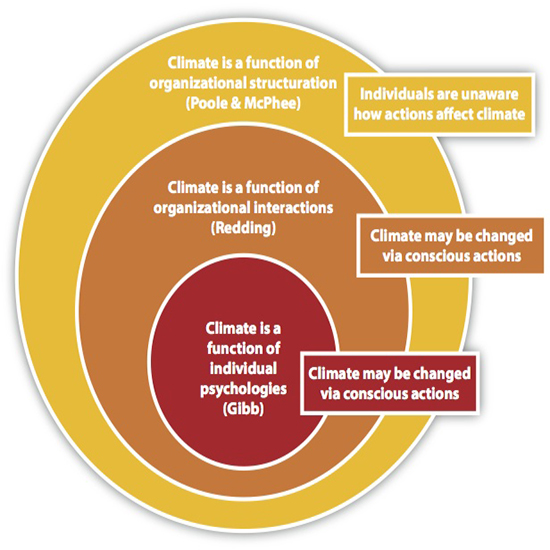
The article, “The Redding Tradition of Organizational Communication Scholarship: W. Charles Redding and His Legacy” by Patrice M. Buzzanell and Cynthia Stohl accurately portrays Redding’s academic legacy and the impact he left on the field of organizational communications. W. Charles Redding is credited with being the father of organizational communications. It was his work that introduced this field of study into academia.
According to Redding, communication is the focus of the message exchange processes that define characteristics of organizational communication as a practice and discipline. Redding used the term communication to “refer to those behaviors of human beings, or those artifacts created by human beings, which result in messages being received by one or more persons.”
Redding was a strong proponent of the study of communication within organizations because he believed that the world was full of many additional kinds of organizations, aside from the already accepted businesses and industries. However, Redding also accepted that sheer chance (luck?) played a huge role bringing and organization together.
It is accepted that Redding’s vision basically shaped the way we theorize in organizational communication. He said,
“Both quantitative and qualitative modes of inquiry will advance our understanding of the complex universe of organizational messages… Moreover, we do not wish to leave the impression that scientific methods are the only ones that will improve our understanding… The most important imperative is that researchers devote much more energy than they have in the past to a close study of the messages themselves.”
This idea shows that we do not just need to research and study organization communication, but also observe and take note of what changes are occurring. There are many ways by which we can measure the communication within an organization. It would be foolish to rely solely on anecdotal or empirical evidence alone. Furthermore, as researchers, we need to devote more time to the message which are being conveyed, rather than spending the majority of our time on studying the “who” and “why” of a given message.
In the conclusion of the article, Redding is quoted saying, “Having put out of mind the impossible dream of finding the one and only DCMF, our theory builder must finally stop thinking about theory and start doing theory.” As I read this final passage from the article, I was left of a feeling that Redding was urging us to not worry so much about studying different theories of organizational communication and to focus our efforts into trying the different theories to determine the best practice.
 Hayden Coombs