Verbal and Nonverbal Communication in Sports Culture
A common teaching in the field of communications is that is is simply impossible to not communicate. Whether it is your posture when interviewing for a job, or maybe a simple smirk at an inappropriate joke, every and any form of nonverbal communication serves as a communication message to another individual.
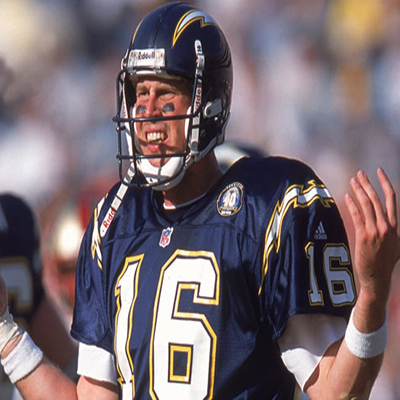
In the world of competitive sports, nonverbal messages can also be very powerful. Coaches monitor their players’ level of fatigue through body language. For talent scouts in any of the major professional sports, it is common practice to measure a prospect’s attitude by observing the prospect’s body language during a loss or when things aren’t going well during a game or drill.
In a 2014 article published in the “Palestrica of the Third Millennium Civilization & Sport,” researcher Carmen Aneta Preja studied both verbal and nonverbal communication in sports culture. Through this research, Preja found that evolution is achieved by the individual’s own development in which heredity, environment and education are considered as an influencing mechanism that marks human advancement.
Ontogenetically, non-verbal communication shows a large precocity, based on innate elements (reactions that are determined by emotions, for example), but also learned elements. On the other hand, it can be an independent form of self-contained communication too, with specific objectives (dance, pantomime, sport, etc.) as well as ”betraying” the individual’s socio-cultural area.
Practicing physical exercises contributes to an ability in forming movements, not only controlling them but also using them for action and expressivity. In sport, the expressive movements of ”difficulty”, ”exercise”, induce to the viewer a sensation of discomfort and inadequacy to the task.
In physical education and sport activity, the word is used by the teacher and student in different situations, with special intentions and methods of addressing.
Also, in sport, motor learning is achieved through directed and self-directed communication, (internal and self-regulated by the athlete) and usual learning is achieved through a more complex use of verbal means.
An athlete’s attitude can be “read” from their posture and facial expressions (example, looking away/down or lack of attention shows indifference or boredom; raised eyebrows show lack of confidence, a brisk walk with the head up indicates self-confidence, a seated position with legs apart indicates relaxation, opening, tilted head while listening reveals interest, an explanation with open palms indicates sincerity etc.).
Ultimately, Preja concluded that these gestures should not be interpreted separately from other gestures or circumstances, but must be taken together and correlated with the situation as a whole.
The article in its entirety can be found by following this link.
 Hayden Coombs